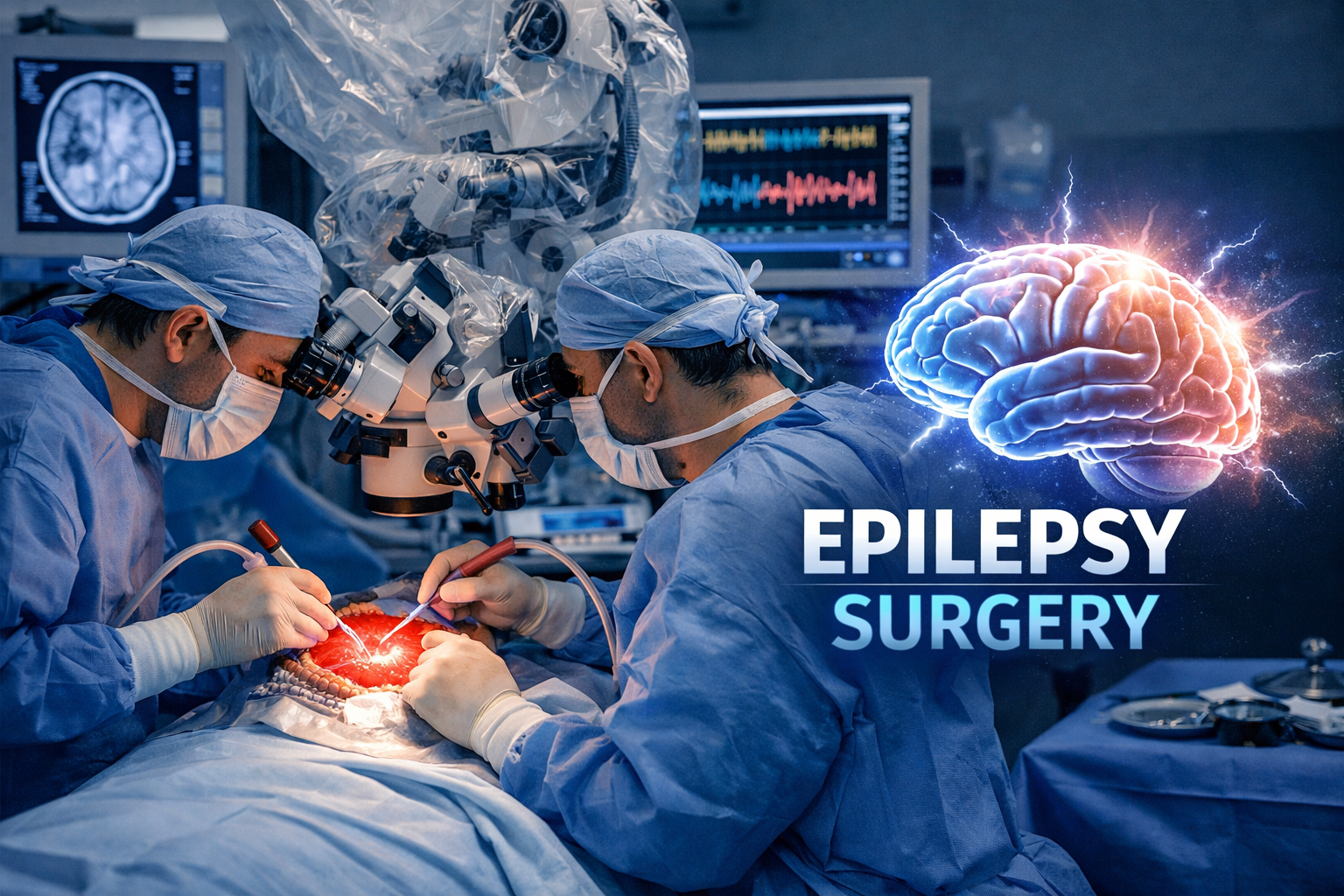
Epilepsy surgery is a specialized neurosurgical procedure performed to control seizures in patients whose epilepsy does not respond adequately to medications. Epilepsy is a neurological condition in which abnormal electrical activity in the brain causes recurrent seizures. While many patients achieve good seizure control with anti-epileptic drugs, a significant number continue to experience frequent or severe seizures despite optimal medical treatment. For these patients, epilepsy surgery can offer a safe and effective option to reduce or eliminate seizures and significantly improve quality of life. The goal of surgery is to identify and treat the specific area of the brain responsible for the seizures while preserving essential brain functions such as speech, movement, and memory.
Epilepsy can arise from various underlying conditions that affect the brain. In many cases, seizures occur due to structural abnormalities in the brain such as congenital malformations, scar tissue from previous head injuries, or developmental changes that occurred before birth. Brain tumors, infections affecting the brain, stroke, or prolonged seizures during childhood can also lead to epilepsy. Some patients may develop epilepsy due to genetic factors, while in others the exact cause remains unknown. When seizures consistently originate from a specific and identifiable area of the brain, surgical treatment may be considered as a potential solution.
The symptoms of epilepsy vary widely depending on the region of the brain involved. Seizures may present as brief episodes of staring, sudden jerking movements of the arms or legs, loss of awareness, confusion, or unusual sensations such as tingling, fear, or visual disturbances. Some patients may experience loss of consciousness or convulsions. In certain types of epilepsy, seizures may begin with warning signs known as auras, which can include strange smells, dizziness, or a sudden feeling of anxiety. Frequent seizures can interfere with daily activities, education, employment, and social interactions, making timely evaluation and treatment essential.
Accurate diagnosis is a critical step before considering epilepsy surgery. A comprehensive evaluation is performed to determine the exact source of the seizures and to assess whether surgery is a suitable option. This process typically includes detailed neurological examinations, electroencephalography (EEG) to monitor brain electrical activity, and advanced brain imaging such as MRI or CT scans to identify structural abnormalities. In some cases, long-term video EEG monitoring is used to record seizures as they occur, allowing doctors to pinpoint their origin in the brain. Additional tests such as functional MRI, PET scans, or neuropsychological assessments may also be recommended to evaluate brain function and ensure that surgery can be performed safely.
The type of epilepsy surgery recommended depends on the location and nature of the seizure focus in the brain. The most common procedure involves removing the small area of brain tissue responsible for generating seizures, known as resective surgery. In some cases, surgeons may disconnect abnormal pathways that allow seizures to spread across the brain. For patients who are not candidates for traditional surgery, alternative treatments such as neuromodulation techniques may be considered. These approaches involve implanting devices that help regulate abnormal brain signals and reduce seizure frequency. The treatment plan is always individualized, with the primary aim of achieving maximum seizure control while maintaining normal neurological function.
Recovery after epilepsy surgery involves careful monitoring and follow-up care. Patients may stay in the hospital for a few days while the medical team observes their neurological status and ensures proper healing. Rehabilitation may include physical therapy, cognitive support, or adjustments in medications depending on the patient’s condition. Although many patients experience significant improvement after surgery, anti-epileptic medications may still be continued for a period of time as advised by the treating neurologist or neurosurgeon. Regular follow-up visits and imaging studies help assess recovery, monitor seizure control, and guide long-term management.
As with any brain surgery, epilepsy surgery carries certain risks, although modern techniques and careful patient selection have significantly improved safety. Potential complications may include infection, bleeding, swelling in the brain, or temporary neurological symptoms. In rare cases, changes in speech, memory, or movement may occur depending on the location of the surgical area. However, extensive pre-surgical testing is performed specifically to minimize these risks and protect important brain functions. For many patients with uncontrolled epilepsy, the potential benefits of surgery often outweigh the risks associated with ongoing seizures.
Patients who continue to experience seizures despite taking medications regularly should seek evaluation by a neurologist or neurosurgeon specializing in epilepsy. Medical consultation is particularly important if seizures become more frequent, last longer, cause injuries, or interfere with daily life. Early assessment allows specialists to determine whether advanced treatments such as epilepsy surgery may be beneficial. Timely medical care not only helps reduce seizure frequency but also improves long-term neurological health and overall quality of life.
“Dr. Raghu Samala provides comprehensive diagnosis and advanced treatment for a wide range of neurological diseases and disorders, ensuring personalized and compassionate care for every patient.”